I originally wrote a post in 2020 about getting free eBooks. Many of those resources still exist but there are also some updates. Therefore, I decided to rewrite the post with updated information.
I love reading for relaxation. However, more than ever accessing eBooks through the public library results in waitlists that could be over six months (no joke there). If you decide to purchase a book, they can cost $20 and up for new releases. So what's someone to do?
Well, one way to get free books is to sign up with the publishers to get Advance Reader Copies (ARCs) of upcoming books. The catch? They expect you to write reviews and publish those reviews on sites like Goodreads and Amazon. Any review would have a disclaimer such as "I received a free ARC from [publisher] in exchange for a honest review."
I have been a member of NetGalley for a few years now. It was the first site I learned about back when I was blogging about how to save money. Many of the large publishers will use NetGalley but be aware that I've been declined as many requests as I've been approved for during the time. Some newer authors will be listed as "read now" and don't require a pre-approval. One piece of advice I received at Comic Con was to make sure my profile showed I worked in education. Publishers have a higher approval rate for educators and librarians.
Booktrovert is a newer site from the same people that run NetGalley. While NetGalley is for ARCs, Booktrovert is more a method of advertising. It's a site full of raffles, first come giveaways, and more.
I learned about Booksprout directly from an author's Twitter account. You can search through available ARCs but you can also follow an author you like. I now get notified when that author I enjoy has new books available.
I learned about Reedsy from someone at NYCC. The site has an interesting variety of books but it appears that only one reviewer per book, so it's first come/first serve. You can also see the books that have already been reviewed. The one thing I found strange with Reedsy is that people can leave you tips for your reviews. If you receive a tip, you must connect a Stripe account to withdraw the funds.
Public Libraries
If you're not interested in pre-release books or agreeing to review the books, you can also look into options like your public library and Amazon for free eBooks.
Every area's public library has different resources. Besides checking your home library, also look into other potential options. For example, here in Pennsylvania we have POWER Library which is state-wide.
Libby is the newer name for Overdrive. There are eBooks, audiobooks, and more. The library has a specific number of digital licenses for each book and if all those books are "out" you can add yourself to the waiting list. You can also search for books the library doesn't own or pre-release titles and recommend the library purchases them. When they do, you'll automatically be able to borrow the title or be added to the wait list if it is a popular pre-release.
A little trick is to see if you have access to other digital libraries. My Libby profile shows Free Library of Philadelphia, POWER Library, and a few others. Check the rules about getting a library card because some cities will give you access if you work or go to school, even when you don't live in their territory. There are also a few cities that will "sell" non-resident access to their library. When you search Libby, it will show all your libraries along with the shortest wait list so you have all the information available.
Hoopla is another site that is offered through many public libraries. Hoopla doesn't do waiting lists, but you are limited on how many borrows per month. On Hoopla, you can get eBooks, audiobooks, movies, and more. They even have what is called the Bingepass for Hallmark movies which provides a one-week at a time unlimited access.
Another eBook resource that some public libraries provide. Freading uses a token system that resets weekly. Just like Hoopla, there are no waiting lists and each two week loan is one token. So until you hit the weekly limit, you can borrow any eBook.
Consider doing a search on Amazon for a book genre and then filter prices by low to high. You will see tons of eBooks listed at $0.00. Once you've clicked "buy" these books will remain in your digital library. You don't need to read them right away but grab them when you see them. There are also tons of social media tags where people share these free books. #BookTok on TikTok and #BookSky on BlueSky are two popular hashtags.
Following the concept of searching Amazon for free books, a few times a year independent authors will team up to market a Stuff Your Kindle day. They will lower the price of the first book in a series, or a novella, to introduce their writing to new audiences. Typically Stuff Your Kindle days will have themes such as romance, fantasy, historical, etc.
Amazon has a subscription program where you can get unlimited books. The subscription is currently $11.99 per month but if you read a lot, it may be worth it. They also offer a free trial. When you buy a new Kindle, it'll come with three months of Kindle Unlimited but make sure you cancel before it ends to avoid being billed.
If you are an Amazon Prime member, you can filter ebooks to find titles that are eligible for Prime Reading. These titles can be downloaded for free. The selection is more limited than Kindle Unlimited, but you can often find some decent titles.
Once again, I had the honor of receiving a professional educator pass for NYCC. Every year, NYCC is a weekend event in October and the Thursday is considered a professional day. This means that some industries, such as education, has specialized panels related to the field.
Storytelling Panel
I love attending and this year was no different. I went to two panels: one about Minecraft in the classroom and one about storytelling through comics. Both panels were incredible. I did get up and ask a question during the storytelling session because these weren't teachers, they were professional writers who make a living in comics. I said that not everyone that wants to be a writer will be as successful as they are and what advice they would give students. The advice was great. One writer said that he didn't start as a comic book writer, he had a "real" job. He would write before work, and write after work, and just write whenever he found time. He said if you really enjoy it do it for that reason and the success will hopefully follow.
Starfleet Academy Orientation Certificate
I checked out the Starfleet Academy display. I received my cadet ID card, and after going through the orientation activities, I was declared undeclared. That's right, I aparently don't have an assigned discipline for Starfleet Academy so I can go any direction from command to science officer.
In the expo hall, I once again met representatives from different publishing companies and receiving free Advanced Reader Copies (ARCs). I am planning to create an updated free eBooks blog post soon because there are so many new resources, along with changes from my original post five years ago.
Superhero coffee anyone?
Of course I also needed to fuel up on every educator's favorite energy source, coffee. How cool is this company that creates comic branded coffee varieties. I'm not actually sure which superhero coffee I had because I ordered a mocha latte from the booth, but it was the perfect pick-me-up.
Another great teacher resource I discovered at this years event was directly from the New York City Department of Education.
"The Civics for All Comics Group began in early 2020 as a collaboration between the New York City Department of Education and various comics creators to publish non-fiction graphic texts for educational use. Spearheaded by the Department of Social Studies & Civics, the imprint has published thirty-eight comics as of July 2025. In addition to publishing comics, the Civics for All Comics Group regularly presents at conferences and freely shares its resources to educators and schools throughout the country."
While they had stacks of comic books at their booth to take, what I took away from them was the digital resources. All the comic books are available for free on their website and range from civil rights to historical events and more. They have comic books for all grade levels and unit areas.
Superman
Finally, a non-education related awesome thing happened this year for me. Every year Funko requires reservations to get on their line to make a purchase of limited edition Pops. For the first time, I managed to snag a covited reservation and got on line at 2:00pm. After scanning my badge to verify my reservation, I was handed a flier showing all the available Pops along with three raffle tickets. A few of the designs I was interested in already sold out for Thursday (they limit each day so they have through Sunday) but I did get a really cool Superman, with the NYCC sticker showing it's limited status.
Shrunken Head in a Jar
While many people walked away after they made their purchases, I hung around for the raffle and I'm so glad I did. I won a super limited edition (only 25 made specifically for Comic Con raffles) shrunken head in a jar. It is probably the most unique thing I could have brought home from Comic Con.
Disclaimer: I received free access on Thursday of New York Comic Con (NYCC) through their educator professional pass program.
Wearing Elphaba's hat in front of the Wicked display.
Once again I was fortunate to attend the Thursday professional day at New York Comic Con. This year, I unfortunetly missed the panels I wanted to attend due to my train being delayed in New Jersey but I still got to enjoy a few hours and explore some great exhibits.
There were tons of comics, movies, books, and more. I didn't take many selfies this year but I did snag a photo at the Wicked display. I also spoke with publishers again. There are some great books coming out this year including the new prequel to The Hunger Games which will be based around Haymitch's story.
Sparky Your Spark of Inspiration
I also introduced my new travel companion, Sparky, to a few people. Have I told you about Sparky yet? No? Well, let me introduce you. When I was traveling full-time for my previous role, I saw some amazing things when I visited classrooms—from Pinterest-worthy bulletin boards to random “Little Libraries” in airports. I wanted to share these sparks of inspiration and turn it into a social media campaign.
For a while, I had a vision of creating a personal mascot. However, I couldn’t come up with a unique idea that I could actually bring to life. I thought about doing something like Flat Stanley (where the idea stemmed from), but I wanted it to be a little more three-dimensional. My favorite Disney character has always been Figment—sorry Mickey. I found Sparky on a random shelf at a local store and immediately fell in love with this purple dragon. Sparky is a Ty Puffie named Spark, a bean-based stuffy about the size of a tennis ball. I know the name Sparky doesn’t sound like an original rename, but I love names that end with the "E" sound. I’m Cor-E. My dog is Ben-E… you get it. Thus, Spark-E was born.
Sparky already has a social media presence, and their website is a work in progress. Check out their link page for all the profiles or head over to their website, Sparky Inspires. Most handles are @SparkyInspires, but if that wasn’t available, I added the number 42. I couldn’t decide on Sparky’s gender, and after some thought, I chose to make them non-binary. After all, Sparky is an inanimate object.
Disclaimer: I received free access on Thursday of New York Comic Con (NYCC) through their educator professional pass program.
I've been thinking of this for a while. When I go out to schools, why do teachers listen to me? I may be considered an expert in educational technology but I haven't been in a classroom in years. When I was teaching, I always hated those so-called experts that rode in on their hypothetical white horse to serve as the white knight saving the day with a new program or software. Something that they claim would make my life as a teacher that much easier.
This past year my career has gone through a lot of changes. While I'm looking for my next adventure, I decided to return to the classroom. This decision though included a decision within the decision. I know that I'm the type of person that wouldn't want to leave mid-year but I also knew I wanted to keep looking for a new role that would allow me to work with a variety of educators and continue presenting at conference.
As this new school year begins, I have placed my name on the substitute teacher list for a few local organizations. This past week, I spent the entire week in one high school classroom while they waited for a new teacher to finish on-boarding. This opportunity was even more interesting because Sunday night, the charter school system where I was substitute teacher was hit with a network outage that lasted the entire week.
This was my first time in a classroom since pre-Covid shutdowns and there I am in a room full of high school students with Chromebooks who can't use their Chromebooks. Not only was the outage the internet, but also the VOIP phone lines, email systems, and loudspeakers. It was crazy to see how much this school relied on their network. A news article about the outage showed the network's administration "...stated the issue did not impact classroom instruction. However, students and parents disagreed, especially since much of the instruction is online and Chromebooks are used."
I walked into the building as was told students had assignments on Google Classroom to complete. Ten minutes later, the dean of students walked in with a stack of photocopies. The students even asked what the packets had to do with Physics and Chemistry (the classes I was responsible for) because they were articles about famous scientists with ELA style questions. The dean told me she found them in the previous teacher's emergency files because even the copy machines were down due to the network.
I spent a full week with these students and Monday afternoon, after speaking with the dean, I bought some offline supplies in. While students were still provided packets every day, I had the dean's permission to do other things. I understand that Physics and Chemistry aren't the same but I am not a Chemistry teacher and I also didn't want to do anything too extreme while a guest in the school. We ended up doing the paper tower challenge. This is an activity I normally do as an ice breaker for adults but it was great for the students. Each group was given six sheets of copy paper and one foot of tape. I then gave each group one text book form the book shelf.
Since I was a guest, I didn't not take any pictures in the classroom but I was very impressed by the engineering skills these students demonstrated. I'm excited to see where I'm sent next.
I recently saw a teacher post online about creating a coordinated plane battleship game. And this got me thinking because the whole premise of battleship is the coordinated plane.
Throughout our childhood and the childhood of our students many board games have been played. Many of these board games have academic relationships and I think it's something that has been discussed but not often enough. So here are a few of my favorite games along with how they can be related to curriculum and standards.
Monopoly
Monopoly is probably the most easiest game to justify because you are learning a lot of skills within the game that relate to both mathematics and economics. For a social studies or business teacher with an economics class, The history of Monopoly along with the practical gameplay easily help students to recognize how business works along with concepts such as taxes and mortgages. Just make sure you find an older version since newer Monopoly boards have a flat tax instead of the 10%. Lazy game producers.
Scrabble
Spelling anyone? Scrabble rewards the use of less common letters more than popular letters. Additionally there is a strategy involved when players try to time their words to reach the triple word score or a double/corner word. Additionally points can be scored by building on another word. For examples if the word run is on the board, add n i n g to make it running and scoring even more points.
Battleship
Battleship is a game that teaches strategy and the mathematical concept of coordinated planes. Students have to know their XY axis along with being able to track and plan ahead for the different ships.
Guess Who?
Guess Who is a classic game where you can only use yes or no questions to narrow down the suspects until you solve the problem. This helps younger students learn how to be descriptive along with organizational skills to track the different characters.
Operation
Operation on its face value is not truly academic because no student is going to be presiding over a surgery where they are removing a funny bone from someone's arm. However the game itself in its construction is academic. When students are playing operation, they are learning about circuitry because in order to make the light bulb light up and buzz the circuit needs to be complete. The gripper is in essence the switch. I have even seen some students use a MakeyMakey with foil and cardboard to build their own version of Operation.
Mousetrap
Rube Goldberg machines are a favorite of science teachers while teaching about simple machines. From pullies, to screws, Mousetrap is a great example of these complex collections of simple machines.
No not all board games are created equal and there are definitely a few which do not serve any academic value. However even those games can most likely be justified or potentially modified. Have students multiple two dice instead of add. Or
A while back I wrote a post that explained my personal feelings regarding the difference between gamification and game-based learning. I feel like now there is a new confusion going around the education industry. Powerful algorithms versus AI. Artificial intelligence learns and grows on its own whereas powerful algorithms are just that. An algorithm has limitations.
An example of a powerful algorithm used in education would be something like voice to text or the opposite; text to speech. You will notice when you use one of these tools that there will be limitations. For example it may pronounce a word incorrectly or it may write the wrong thing when you talk. This is because while it is powerful it does not learn the more it is used.
AI on the other hand learns on its own. Yes it is still a type of algorithm but it is a much more powerful algorithm that has the ability to pull from its previous experiences. This is why the more people that are using AI the better the AI is becoming. It is also why we need to hope Sarah Connors is ready for us in the future because we are leading the path to the robots revolution.
If you are attending workshops and conferences on AI please remember to take it with a grain of salt. Some of these so-called experts are not experts at all. Honestly I think it's impossible to be an expert at this point because AI is still such a new technology in the education field.
Now when Data becomes a real person, I'll be first in line at Comic-Con to get his autograph.
I once again received a professional pass to New York Comic Con as an educator. This year, I only went for the one day but found it to be enough without getting overwhelming.
The day started with a quick stop at the Paramount+ booth where they were hosting a game version of Good Burger, because the movie will be coming out shortly. I then walked around the expo floor for a bit before heading to the panel sessions.
On Thursday at Comic Con, the New York Public Library works to organize educational panels and I sat to listen to some educators discuss "Kids as Content Creators: Engaging Media-Savvy Students". During the session, the teacher was talking about this cool program, Pixton, to allow students to create custom comic books. The most interesting part though was not from a presenter, but from the woman sitting behind me. While they were discussing the cost for the subscription and how they fundraised, she muttered under her breathe that the New York Public Library provides Pixton to all library card holders. This got me interested to go home and see what else Philly offers that I may not know about.
Continuing Education Credit for NY Teachers
While at Comic Con, I walked around the expo floor and spent a good amount of time speaking with the publisher's booths. Last time I attended I learned about a few Advanced Reader Programs so I was excited to see if there were any new resources out there.
Overall, I had a great day. Knowing that NYCC allows educators to apply for the professional pass is amazing and the Thursday sessions for educators are a great way to see how others are using literature, pop culture, and technology to work with students. Thursday is typically the slowest say of the weekend but when walking in the expo hall, it was shoulder to shoulder. I can't imagine how crowded the weekend would be.
Walter Emanuel Jones Original Power Ranger
For the big stars that were signing autographs or doing professional pictures, they had a separate area, but other less popular (but still really cool) celebrities were sitting at strategic booths throughout the expo hall. I didn't pay for a selfie, it was $60, but I thought it was cool that I recognized one of the B list celebrities that were sitting at a vendor's booth. The original Black Power Ranger, Walter Emanuel Jones. He was also in the Nickelodeon show Space Cases. I loved Space Cases and always thought it was kind of a kids version of Star Trek. The group of misfit students snuck onto a ship and then launched lightyears away. Similar to Star Trek Voyager, they had to work together to find their way home on a seven year journey.
Disclaimer: I received free access on Thursday of New York Comic Con (NYCC) through their educator professional pass program.
I've recently been wondering something and it's been stuck in the back of my head and I want to bring it out.
Imagine you are a child and your parent wants to be able to brag about you so they buy your way onto a team. Example, Draco Malfoy in Chamber of Secrets when he joins the Quidditch team after his father buys the entire team broomsticks.
Now you didn't really earn your place on that team but you still go around bragging to people and acting superior because you were on the team. Everyone on the team knows you're only there because of the equipment your parents bought but you still act high and mighty.
Now imagine that you are a child who has no idea that this is going on. Perhaps the broomsticks were donated anonymously to the school specifically for the team and your name is on the roster the next day.
The same situation where your parent bought your way onto the team, should you realize it? Notice that correlation? And what should you as that child do? Taking this thought a step further what happens if you know one of your classmates is a better player. Do you take the position that was purchased for you or do you step aside?
This scenario is just one extreme example of a complex issue revolving around equality in education. Parents, rich or poor, will do almost anything for their children. However, I often wonder if we're really just hurting the future.
There are cases circulating the news such as a story from 2016 that pops back up often regarding a teenager who drove drunk and got in an accident. His lawyers argued "Affluenza" as the defense. This teenager was raised to believe actions didn't have consequences because his parents would buy him out of trouble. How many more stories like this never made national headlines?
The point I'm trying to make in this rambling, both fictional and real examples, is I want to know if there's something we can do to stop this from happening? It's not just students. I recently received an email that I had been selected for an award. To accept the honor, I would have to pay $2000 for processing, press releases, and other things related to the "honor" and it made me start questioning how many people brag about honors that they really just paid for.
I know sometimes someone else is paying for these awards. For example, I'm in a regional organization and every year we honor one person with a national award. The regional organization has the authority to select our winner, but we pay the national organization for everything that the winner received such as the plaque, medal, award ceremony attendance, and more. So we are technically paying to give the award. The difference is that the recipient is not paying, the provider (sort of) is paying. I also understand that things like the physical award does cost money even if the title itself doesn't. Is an email and social media post as exciting as a plaque to hang in one's classroom?
Enough of my rambling today on paying for awards. Often when I see the list of recipients, like "30 K12 Influencers to Follow" I know right away know that it's well deserved. Just don't pop my bubble by telling me someone paid to make that list because I know a bunch of the people on the list and know they deserve recognition.
I've been doing professional development now for a few years but yesterday was a new experience for me. I went to a private school (not the new part) that was part of a Mosque (that's the new part). From the name of the school, I had assumed that it was associated with Islamic culture but I didn't realize how much. Throughout the day while I worked with the teachers on SEL, conversations mixed in about culture, along with them needing breaks at specific times for prayer. By the end of the day, I think I learned as much from them as they did from me. I wanted to share some of the experience and also my reflections, both personal and professional, about the day.
When I introduced myself to the group, I explained that I know their culture has similarities to my own, Judaism. I understood that they separated by gender and I didn't offer to shake hands with any of the men when I met them. I also stepped back to give space when the IT person was connecting an extension cord to my charger.
It was interesting when he was speaking in Arabic and the principal (in English) told him that he should speak English while I was there. I told them it was fine and joked that I would just assume they were talking about how awesome I was but they did speak English the rest of the day for my benefit.
After introducing myself to the whole group, I took the opportunity to start with a language demonstration of using Microsoft Translator to collaborate with a global network. I told them of my experience working on a global team for E2 and that while we didn't speak the same language we were able to present together. This was my way of showing that if they were more comfortable speaking Arabic, as the minority in the situation I was willing to communicate in their language.
There were 16 attendees in total and it was immediately clear how close this group was. They were not just colleagues but almost like a family. In fact, when we were discussing SEL and some common classroom scenarios, one teacher told me that their students are more like sibling rivalry than classic fighting. This really was a micro-community in the heart of a larger city. They are neighbors; they pray together, work together, and go to school together.
Since I had not thought ahead but didn't want to disrespect their space, I offered to eat my lunch outside rather than bring non-Halal food into their mosque. I explained that when I've trained at the Jewish Day School I would pack a kosher lunch but wasn't thinking when I prepared for the day. One of the women told me that Halal and Kosher foods are very similar and that in-fact they are likely to take a kosher meal on flights or in hospitals because Halal isn't an option. I actually found that statement extremely impactful because I was under the impression that Halal eaters were more common than Kosher eaters.
In the afternoon the group went downstairs for the prayers and I stayed upstairs in the classroom. One of the teachers that was not praying with the others invited me to watch if I was interested in learning about the culture. She explained why she was not praying with the others that day. As we spoke and watched, I saw more similarities between their culture and my own. I am not an Orthordox Jew but I do know the rules and customs. The men stood at one end of the room while the women were on the other. When they got down on the floor, some were sitting in chairs and the woman I was standing with explained that health always comes first and adaptations can be made when needed.
The final interesting thing that came up was when we were talking about parental communication. One teacher gave an example of a time when a new student who didn't speak English or Arabic joined the class. He said something that sounded like a bad word in English but actually meant something very innocent in his own native language. This led to a discussion that online translators aren't perfect and that they translate literal statements. I used "It's raining cats and dogs" as an example of an idiom that makes sense in America and English but might confuse someone when translated.
I will be going back to this Mosque at the end of the month to provide another session and I am interested to see what more I can learn from them while I am facilitating the training. The upcoming training will be technology rich, specifically Microsoft tools.
Disclaimer: This blog post is my personal reflection to a training I completed on behalf of my employer. However the post is my own experiences and opinions. It does not reflect my employer.
I'm going to use an analogy so that I don't specify specific brands of EdTech but hopefully the point of this blog post will make sense.
There are many brands that make similar products and while one brand is well known for good reason it's not the only brand available. We'll start with an analogy using crayons. When teachers send out supply lists, while some teachers will just specify crayons other teachers will specify Crayola crayons. Why is this?
Do the store brand crayons not come in multiple colors? So why do teachers constantly recommend Crayola? The answer is simple. They are known for their quality and consistency. They're stronger and don't break as easily so even though they cost the little more upfront at the end of the day they will last longer.
There are tech products that also follow this pattern. From 3D printers to interactive panels there is always that one brand that is slightly more expensive but has a greater reputation. There is a reason why when you go to purchase a 3D printer for a classroom you go to the EdTech specialists or the vendors that sell industrial quality printers and not to your local Amazon page to buy the cheapest 3D printer available. It will still work, but it won't work as well and it will probably break down faster meaning you will have to replace it sooner.
Personally, I own one of those $200 3D printers and I use it at home. But I am one person and I am only printing the occasional object. A classroom is printing multiple projects and often running a printer constantly for days at a time to complete the entire classes queue. My printer at home would never be able to keep up with the demand of a classroom so while it is much cheaper up front I would probably have to purchase multiple printers and then replace them often because they don't last. For those people who know me you will also know that I am very obvious with my likes and dislikes in the Ed tech world. I will talk with a school to see what their goals are and I have recommended products that I don't personally use because I know that they are probably better for that individuals needs.
You may now be thinking that there are multiple brands that make quality products so how do you choose? For this analogy I'm going to use cars. If all cars are required to have standard safety features, why would some people prefer one brand over the other? Sometimes it comes down to the aesthetics. Sometimes it comes down to something as simple as what features are standard and what features are costing extra. My last car was a Ford but I currently own a Toyota. I love my RAV4 but that doesn't mean my next car is going to be a Toyota again. When it's time to upgrade my vehicle I will compare the different brands, compare the features, and take a test drive. Only then will I be informed enough to make a good decision about which car is best for me.
This is another reason that I like to keep up with all the trends even though I'm no longer in the classroom. Because when I give somebody an opinion it's an educated opinion based on my personal research and experience. I may recommend one brand this year, but that doesn't mean it will always be the best brand.
This past week has been a windstorm of awesomeness. Less than a month ago, I wasn't scheduled to attend ISTE. However when my waitlisted session got switched to accepted, my supervisor helped make it possible for me to attend. We had a booth in the expo hall, so I joined the team representing down in New Orleans.
Like many travelers right now, my flight down to New Orleans was delayed by three hours. Luckily the airline knew ahead of time about the delays so I was notified prior to leave for the airport and was able to relax at home a little longer. This also meant I could attend the virtual MIEE event since I would have been mid-air otherwise. However, I sadly missed Tara and David's wedding which took place at the opening keynote. Since I wasn't originally going to attend ISTE though, Tara already knew I couldn't attend but I did get to meet up with her during the week.
Otis hanging out in Minecraft
I spent most of my days at our booth in the expo hall but I did get a chance to walk around a bit in the morning on Monday before the expo hall officially opened, I walked around with Otis to take some #WheresOtis pictures. I also took advantage of this time to catch up with the teams from Microsoft, Wakelet, and more. Thank you to Wakelet for hooking me up with a t-shirt before the hall opened.
Attending ISTE as an exhibitor was an experience in itself and I was really fortunate to be working with such an amazing group of people. As an exhibitor I wasn't able to attend sessions or keynotes but if being completely honest in previous years, I've missed the sessions I wanted to attend because they were too crowded or at the same time as other sessions where I never choose which to attend. Throughout the week, I was able to reconnect with many friends and make new connections. These connections are honestly the best part of conferences such as ISTE.
Time to present my session.
On Tuesday afternoon I presented my session, Turning Consumers into Creators. It was the end of the day so the audience wasn't huge but they were active and we had some amazing discussions take place. When we talked about the type of creating we want our students to learn one attendee shared a story of how her students began creating videos about social justice. We also discussed using Canva to teach social media marketing.
During ISTE, I learned that I was included in Scott Nune's ISTE'22 hitlist. I also learned after the conference that my session was actually listed on Screencastify's Can't Miss Sessions ISTE'22 list they published before the conference. So that was really cool to discover. I have been working so hard to grow my reputation in EdTech as an influencer so seeing my name showing up on these influential lists really made me feel awesome.
The only thing I was sad about was missing some of the events I would have otherwise attended in years past. Events such as Flipfest and EdTech Karaoke. The schedule was so packed that there were difficult decisions to make.
Following ISTE I took a Covid test when I arrived home on Wednesday night and again every day for five days. Luckily all were negative because I did see many friends that I had spent time posting about positive results. This is sadly the new normal we live in. ISTE was the first time I really went out in the public without a mask on in over two years. I knew I was taking a risk by not wearing a mask in public spaces but I did anyway. While this easily could have ended differently I was fortunate that my good time in the big easy didn't result in a week of quarantine.
Disclaimer: My attendance at ISTE'22 was covered by my employer. However this post is my personal opinion and does not reflect my employer.
Two years ago, I was selected to attend the Education Exchange (E2) in Australia but prior to going, the conference was delayed and then canceled. Now, in 2022, E2 has gone virtual. While it means I don't get to travel to Australia (yet) it also means that I had an amazing opportunity. I was selected to be part of a team of four to present one of the breakout sessions.
Sadly, one of our four team members never responded to emails so we ended up a team of three. But we were a magnificent team of three. That is of course once we finally got started. That was one of the major lessons I learned from this experience. All three of us were located in different time countries (United States, South Africa, and Viatnam) which meant three time zones and two languages.
Our team
When we were first teamed up, it took a while to find that time that worked for all of us and it seemed we were all of the mindset that we didn't want to start on our own and waited for the others. Finally, I created a Word file in OneDrive and we all started just free-flowing our ideas and commenting on each others. Then, one of my teammates created the Powerpoint template and we all added slides to the deck. It was slow because there was long wait periods between feedback and changes but eventually we got it together, with less than 24-hours to spare.
This experience was a great learning experience and I look forward to when E2 is held in person again.
This is a little sad, but I had to turn on comment moderation for my blog. As of right now, I don't get many comments on posts here, but within the last week I had over half my posts, new and old, receive random comments. All filled with text about online casinos and hyperlinks to... I don't know, I didn't click the links.
I deleted the comments and felt it necessary to turn on comment moderation. This means that if you would like to comment on one of my posts, I will get an email and need to manually approve the comment. I want everyone to comment on my blog even if they disagree with me, but I need to prevent these spam posts. I promise that as long as your comment is related to the blog I will approve it to be displayed, even if I disagree with you. The only comments I will ignore are ones such as those casino spamming comments.
I have a feeling these spammers are trying to build their SEO by having random websites link back to their site. What is SEO? Search Engine Optimization. I only am beginning to understand marketing and SEOs as I've taken a bunch of courses through LinkedIn Learning and HubSpot. The basics and what I believe the unfortunate purpose of these spam comments is that search engines such as Google and Bing rank sites based on their validity and popularity. Therefore, if more people link to a site it improves that site's ranking on the search engine. Links for ranking purposes must come from external sites. For example, if I link this post to a previous post, that won't affect either post's ranking because they are internal links.
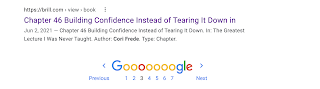
Page 3 of a Google search
Side note: While going to grab a screenshot of a Google Search, I discovered on page three of searching my name, I've finally been published. I wrote an essay almost two years ago and submitted it for an anthology on mentorship in education. I remember signing papers giving permission to publish it but I never heard anything after that so I forgot about it. I guess the lesson is sometimes it's worth going past page two of search results.
In my first return to the new normal, I spent the last week of January in Orlando attending FETC. This was not only my first time attending FETC, it was also the first in-person conference I have attended since the initial shutdowns began. It was exciting to be with my peers again for the first time since January 2020, but it was also a little scary. The world has changed a lot in the last two years, but one thing remained the same - teachers attending conferences to learn new tricks, tips, and programs to bring back to their local communities.
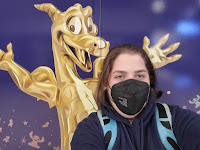
My trip to FETC began with a day where Murphy's Law ruled. The entire morning represented the expression "whatever can go wrong, will go wrong" but eventually I arrived at the airport and checked-in for my flight. When I landed in Orlando, I knew everything was looking up when Figment greeted me at the airport. You don't know Figment? He's the underappreciated mascot of Epcot, a Figment of my Imagination. Eventually, I arrived at the hotel and made a plan for the next day.
Day 1 (False Start)
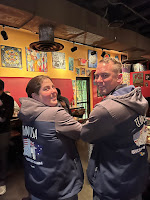
MIEExpert Road2E2 jackets seen in the wild.
One thing I learned, a little too late, is that the first day of FETC is all premium workshops. This means that you needed to register and pay for a premium registration to attend. Therefore, after I checked in and got my nametag, there wasn't anything for me to do. So what did I do? I spent the day relaxing and maybe I did a little shopping.
Before long, it was time to meet up with my MIEExpert family for dinner and a reunion. Our dinner lasted so long it was amazing the restaurant didn't kick us out. Not only was it the MIEEs, but we were joined by the awesome teams of Flipgrid and Wakelet as we all caught up on two years.
I not only reunited with friends and peers. I also made new friends and connections.
Day 2 (The Real Start)
Wednesday morning revealed the true FETC beginning. I started my morning by trying to attend a session on making professional development engaging but it was standing room only so I ended up leaving. Made my way over to Microsoft's room and found that was standing room only also, but there was enough room near the door that I stayed to listen to Leslie Fisher talk about Teams and OneNote.
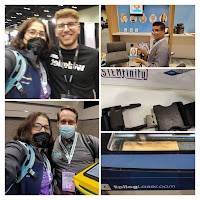
Collage from the expo hall.
The keynote was much better in the sense that there was plenty of space to social distance. The speaker focused of SEL and encouraged positive psychology to help students and colleagues (and self) through the stressful times known as Covid-19.
I spent a good amount of the day in the expo hall learning about new products and features of products I already knew before trying to attend a few other sessions. One thing I will say about FETC is that because it was the first in-person conference and because I was really nervous about being in crowds I missed out on a bunch of sessions I wanted to attend because they were all popular.
Wednesday night, I was invited to an event hosted by Nearpod and it did not disappoint. I am not part of Nearpod's PioNear program like I am with Microsoft's MIEE program, but they welcomed me at their dinner anyway and made me feel like family.
Day 3
Day three started with another Keynote and more networking. In the afternoon, it was my turn to present a session on Digital Whiteboarding. My session was scheduled for one of the mini theaters in the expo hall which was great because tons of people were stopping to watch for a few minutes between checking out the vendors.
A Canva template.
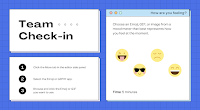
I had planned demos of a few different whiteboarding apps to compare them and show how teachers can use certain templates, such as those from Canva, with a variety of whiteboard softwares. For example, if a teacher wanted to use Canva's template for a Team Check-in as the background for both Microsoft Whiteboard and Google Jamboard. It can also be used in programs such as Nearpod and Peardeck.
Murphy's Law reared its ugly head again as I had a lot of wifi issues during my session. Luckily, Microsoft Whiteboard is not 100% cloud-based so while I couldn't demo the cloud and collaboration, I was able to demonstrate the Windows 10 whiteboarding app. While the cloud was not cooperating, I did have my slide deck in PowerPoint so I was able to also show screenshots and discuss some pedagogy including the awesome templates on Canva.
After the Conference
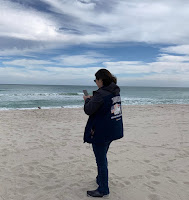
Miami Beach
Due to the snowstorm in the Mid-Atlantic, airlines warned about flight delays and cancelations, so I managed to change my flight home from Friday to Sunday and from Orlando to Miami. I then got a ride from another MIEExpert that was heading home to Miami and spent the weekend with my aunt. Since I was following his schedule for Friday, I did leave FETC before the final day was over but luckily I was able to accomplish everything I had hoped to while attending FETC.
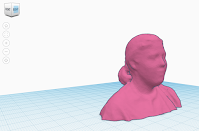
A while ago, I was at an expo for a half marathon when one vendor was offering free health scans. It was a system called fit3d. While the system really is used to determine body fat, muscle mass, and other health-related measurements that's not why I'm writing about it. The system also created a 3D image of your body. When I was looking at some fitness programs to consider right now, one gym was offering a free scan when you joined. They had mentioned that after the free scan, you could purchase a package of additional scans to get an accurate comparison of your progress. This reminded me of the scan I already did so I went to the website. After resetting my unknown password via email, I was able to access the history with my previous scan. Then I saw that not only was there a 3D avatar of my body to see on the page, but it could also be exported as an OBJ file. Well of course you obviously know what I did. I printed my bust. How cool is this?
Printed bust
I know I've seen some small 3D scanners so now I'm wondering how we can replicate this for students. I don't think schools are going to purchase this fitness scanner, but maybe there is a less expensive scanner. Or some method of manually scanning a person's head or something. Perhaps the opposite of a panoramic image.
This is definitely something I am going to look into more. Perhaps I'll find the solution next week at FETC.
Over the new year, I spent an extended weekend with my family. It was a much needed vacation but the best part was my excited five-year-old nephew showing me his new school issued Chromebook. He just started kindergarten this year and every experience has been new after his last year in daycare and pre-k was mostly virtual or non-existent.
The first thing he wanted to show me was his new Chromebook. He was so excited to have a big kid computer. I loved seeing the practical use of all these programs and devices that I study and learn about. Since I work with mostly secondary teachers and was a secondary teacher before leaving the classroom, I wasn't sure how the younger students would do. Well, I'm impressed. Am I impressed with him or his teachers though? Or the Ed Tech companies that make the products? I think it's a combination of them all.
Chome "Beachball" Icon
To start, he used a Clever QR code to login to the computer, but his Google login was also on a sticker on the palm rest. I wasn't happy about the sticker with his password for obvious reasons, but I understand that he's five and the district probably needed to do something. I just hope they don't do this for everyone.
He had his QR code on a small piece of paper that was sandwiched in the closed computer and I did comment to my sister that I was surprised they didn't at least laminate it. She informed me that they have multiple copies and the classroom teacher has extra if it gets lost. My nephew showed me where to click on the screen and then how to hold the paper up to the camera to login.
His Chromebook is a touch screen and I think that was a good thing because I didn't once see him use the track pad. I'm not sure if he knows how and finds the touch easier, but I didn't ask. He did type a few keys when he pecked at some numbers.
Once logged in, he told me that I needed to click the beachball to open the computer. Yes, he called it a beachball and when I looked at it, I was surprised I never noticed that before. This is what I mean about kindergarten teachers knowing how to reach their students.
His district has defaulted the Clever page as the home tab so it automatically opened a page with all his bookmarks. When I started to type a page directly in the omnibar my sister actually looked up from what she was doing and reminded me not to "mess up" his computer because he wouldn't know how to access anything. In her defense, I do have a reputation for changing things on family members' computers (video clip from The IT Crowd that represents me trying to help) however I never mess with core functions or features.
My nephew pointed to Dreambox and was excited to show me all the games and avatars. I have heard of this program before but never actually used it, so I learned a lot by having him guide me through it. Seriously, he kept referring to it as games, never once referring to it as math. I love that. He was voluntarily practicing his math skills and referring to it as games. As someone that grew up on Reader Rabbit and Math Blasters, I completely agreed with this mentality.
Just a few bookmarks I saw on his Clever page:
BrainPop
Discovery Education
DreamBox
Google Classroom
Newsela
Renaissance Learning
Typing Club
I really enjoyed learning about the Chromebook from the eyes of my nephew. Seeing his excitement about both the technology and school was great. Knowing how important the kindergarten experience as the first introduction to school, I'm glad to see that halfway through his first year he's having such a positive experience.
While I don't consider myself an influencer, I also know that any educator on social media is an influencer. I'm hoping that I am doing this in a positive way and being helpful to other educators.
For a while now, I have posted about products I love, made video tutorials, and more to help others. This is why I'm very excited that for the first time in my educational social media experiences, I was contacted by a representative from a hardware company, Wacom. They saw my presentation listed on the FETC agenda and felt their product could help educators.
It arrived last week and I created an unboxing video so far. Since then, I have been testing the tablet in a variety of software to make an opinion before creating my next video and review.
In total, I plan to do a three piece series of YouTube videos:
Unboxing - Showing how it arrives and setting it up.
First impressions. Is it easy to start using? Is there a learning curve?
Follow-up. After using it for a while, what are my final thoughts?
I hope that this product is as helpful as they said in their email because I haven't used it before but after searching current YouTube video tutorials, it does look like something that can really help teachers.
I'm in the middle of a project and was trying to give an example of why project-based learning is so valuable. I remembered hearing a while back an analogy comparing step-by-step "project" lessons to recipes and are not true projects. The basic concept is that if every single student is turning in the exact same assignment then it's not a project it's a recipe. The whole goal of project-based learning is to allow students to explore different possible outcomes.
I knew I had seen a meme but could not for the life of me find the graphic. All my search results were leading me to lessons about actual cooking not a concept comparing lessons to cooking. This is why I turned to social media for help.
I posted on both LinkedIn and Twitter asking if anyone else remembered hearing about this concept. Within an hour I not only got an answer on Twitter, I also got a link to an article from 2017 about the concept.
About an hour before this post goes live, MIEExpert Cohort 11 premiered this short video that we have been working hard on. While my part in the video itself was relatively small, I did play a large part in the project as I edited the footage together.
This was by far the largest video project I have completed to date. While the video itself was shorter than most of my other videos, it required tons of editing, organizing, and more due to the amount of participants and individual clips. I decided to break down the steps we took to create this video.
The Idea
Earlier this year, Cohort 11 was assigned May as our month for the community call. As our turn was getting closer, the Fellows (myself, Karey Killian, and Rebecca Gratz) were discussing ways to make our call stand out from the previous cohorts. We had been discussing a video by Annie Agar that had been making the social media rounds a few weeks earlier and decided it would be fun to try and parody it. An idea was born.
The Script
We started by transcribing the original video and then modifying the script. We added Minecraft, Flipgrid, and more to turn the video from O365 to O365Edu.
The Cast
For our turn at the community call, we needed to select four presenters from Cohort 11. Amazingly because our cohort is just that awesome we had way more volunteers than slots. Reaching out to the potential presenters, we found our cast.
Recording
Originally we thought about recording a live recorded Teams call, but it was difficult to find a time that worked for everyone's schedule. At this point, we realized that there was a perfect platform available for recording, Flipgrid. Once the script was finalized we sent our cast the Flipgrid link and password. They all recorded on their own time.
I knew that I would want to have some group screens and reactions so I also asked all the cast members to record ten to thirty seconds of reactions such as laughing and looking bored. This ended up adding some great comedic moments such as Matthew Nickerson as Minecraft laughing while the teacher is talking and Dianne Krause as OneNote covering her camera in disgust at a purposely bad joke.
Editing
This was the biggest challenge and the reason I decided to write this as a full blog post instead of just a quick Tweet.
When I started downloading the videos from Flipgrid, I forgot that there was an option to download all the videos from a topic at once and it was taking me forever. Then I remembered how to get them all at once and it spend the process up dramatically. The next issue though also had to do with downloading the files. Each file was saved in an individual folder within the zipped file and was numbered, not named. Using the search feature on Windows I was able to isolate all the MP4 files within the main folder and transfer them out of the individual folders. Took a moment, but it wasn't difficult.
Next, I needs to sort the files based on the character and content. The content part wasn't difficult because each original zip file was from one topic, but I had to figure out who was who and the thumbnails were hard to tell.
Once I had all the clips downloaded and labeled, the next step was something that I might have been able to simplify if I had more Camtasia experience, but I did it a long-handed way. I took one character at a time and added all their clips to a track line. I then changed the label/bottom third on the video and saved it as a new file. This way, when I resized their screen for the individual vs the multi-view, the label resized appropriately with the clip. I wouldn't need to worry about font size and such because it will all stay proportional to the clip.
Now that I had each individual role sorted and labeled, I was able to start the real video. At this point, I realized i didn't have a template for a Teams call so I relied on my MIEExpert tribe for assistance. I started screen recording and then messaged my group asking for anyone that was online to just join the call for a few minutes. Once I had about thirty seconds recorded, I was able to have the intro screen and borders. Using my Camtasia tracks, I just overlaid our "teacher" over myself in the call starting up.
I created a track for each person, my background, and a few overlays. It ended up having fourteen tracks by the time I finished. I then cut the clips and positioned them in order of the script. I had to be careful of where I cut the clips because some people started/stopped recording too quick and I I took all the reaction shots and placed them at the end of the track so they were available to pull over as I continued.
This video took the longest to edit of all videos I've made so far just because of all the moving parts but I was very proud of my first draft. I uploaded it to YouTube, unlisted of course, and shared it out to the actors. I told them that there were a few issues I was hoping to play around with and fix but I wanted to get their opinions at that point. I then went back to work.
There were a few spots when I had the multi-person scenes that I had to stretch some clips to make them the same time frame. When you see faces that look slow or possibly frozen, they are. For example, some people said hello and waved for a clip that allowed me to cut some of the waving while others said "hello" and stopped the recording very quickly. By freezing a frame, it stretched it out so I didn't have a black screen for one person. This mostly happened during the multi-person screens and were small that you might not focus on the frozen person while the other window had the speaker.
The other editing challenge I had was the multi-frame shot at the 0:54 timestamp. I had shrunk the Windows actor and increased the Word actor. The problem was which clip was the top track. It was causing Windows to stay on top of Word in that top corner.
Sharing the Video
So I wrote this post and scheduled it to publish before I actually shared the video with the group. I hope that everyone enjoys it when they see it because it was a lot of fun, and a great editing lesson for myself. I would love to do more projects like this in the future with my friends and I'm sure the process will get faster with experience.
Thank you all for watching the video. Be sure to like and subscribe if you enjoyed it.
When I was in college, I did what was considered crazy by many of my friends. In a world before online classes were widely offered, I decided to take a semester away from college to get some real world experience. That "real" world was of course Walt Disney World. For six months, I lived in Buena Vista, Florida and worked in attractions at The Magic Kingdom. I took some courses at Disney University, officially referred to as Disney Institute, where I learned skills not taught in traditional college courses and earned my Ducktorate Degree.
Over a decade later, I still have mementos from that semester including the little magnet that was used to represent my position for the day at Jungle Cruise. They got rid of the magnet board and now use a digital assignment system, but those magnets still hold a sentimental value for all of us that worked before a computer told you where to stand for your shift. I also saved a Cast Atlas which was the behind the scenes map so I didn't get lost, and both my name tags. The dirtier/aged name tag is the one I wore every day in the parks, while the cleaner one was provided to me when I became a campus representative and helped future interns with the process at school before leaving for the program.
The first day of my Disney College Program, I arrived at The Magic Kingdom in the early morning, before most of the employees and obviously before the park opened for the day. That day it felt magical to see Main Street USA without the crowds. While I saw this as a magical experience only a few were able to witness, now it's sadly a common view as the park was closed for months.
The following week was spent earning my ears as I learned the ins and outs of the park, the history of Disney, and specifically The Jungle Cruise where I was assigned for the semester. When I was handed the 50 page packet and told to start memorizing the script, I was in shock. However, like every other part of the internship it turned into an experience I will always remember that helped me grow as an individual.
Main Street USA, Early Morning 2004
In the end, I may have been driving boats and telling jokes all day but I also learned those soft skills that we always talk about with our students. Here are just some of the lessons I learned during the semester that I still use everyday as a professional.
Accept Disappointment and Learn from It
My very first day during check-in, I was asked "Which is your favorite park?" Which I immediately replied Epcot. After a pause, the HR representative said "What's your second choice?" Disney's recruiters said that they tried to match positions based on majors. So as an education major, I thought I would be placed at Epcot or Animal Kingdom. Imagine my surprise when I was assigned Magic Kingdom. I was upset, but I knew that I wasn't promised a specific position and that it was the reality of my assignment. I let myself be upset for a bit and then moved on. Of all the college students assigned to Jungle Cruise that year, four of us were education majors. Maybe Disney realized something at the time that I just didn't understand.
Working with Others
Disney was the first time I was forced into a situation where I couldn't talk my way into a situation I preferred. In school, even when groups were created by the teacher, I tended to work with the same people that I had grown up with and knew. In college, I got to know everyone in my core classes and when it was group projects, we tended to gravitate to the same groups each time. At Disney, I was thrown out of my comfort zone and actually had to work with people that weren't always the easiest to get along with. This allowed me to learn soft skills such as conflict resolution and compromising because I couldn't just walk away when someone made me upset.
Another day on the river, Jungle Cruise
Public Speaking
As a Jungle Cruise Skipper, I was responsible for telling scripted jokes along the ten minute boat ride. While scripted, it still had to feel natural and not off. This got easier as the semester went along, but some other things I learned in terms of public speaking were just the general skills. Intonation, eye contact, and volume control. As a naturally loud person, I had to learn to hold the microphone away from my mouth and also be conscience of how loud I was being in general.
Non-Verbal Communication
Each day I would interact with over 500 people many that didn't speak English. This made non-verbal communication even more important as I directed them to seats, gave safety information, and tried to make the ten minute ride enjoyable when they couldn't understand the jokes. The classroom is the same thing. Teachers always talk about "the look" and it's true. Students can take a lot of social clues from a teacher's non-verbal communication.
Time Management
While working at Disney, I didn't bring a car to Florida. Therefore I relied completely on the transportation provided by the student housing. They had a variety of bus routes that went to all the parks, along with major shopping areas. For The Magic Kingdom, the bus stop was in the cast member parking lot which was about a half mile behind Splash Mountain. AKA, really far and not walk-able due to safety. I would then have to get on a different shuttle to the cast member locker room where I would change into my costume and clock-in. This process meant that if my shift began at 1pm, I really had to get the bus that arrived by noon so I had time to get the shuttle, then my costume, and actually get ready.
Expect the Unexpected
Part of the training at Disney included emergency preparedness. As a ride that took place on water, we had to prepare for weather related incidents along with other acts of craziness. While crazy things happen at Disney all the time, there are two specific incidences that I was somehow in the wrong place at the right time for and ended up needing to assist.
On February 8, 2004* I was working crowd control at the 3pm parade. After we put the ropes up, we would play silly games with kids until we had to clear the street. I was mid-Simon Says when a manager came over the walkie-talkie saying the parade was stopping after three floats and to wrap up the ropes. While we were putting the ropes and poles away in the storage closet, we learned why the parade was canceled; an accident backstage. This accident also led to a complete revamping of safety procedures for all the parades. Luckily no children witnessed the accident but every cast member there that day knew what happened and had to pretend everything was normal to preserve the magic for guests.
On March 10, 2004* I was coming through the hippo pool when I noticed people standing up on the boat ahead of me. As I slowed the boat I was driving down so we didn't crash, I realized they were standing because the boat was under water. That's right, only twice in the history of all Jungle Cruise attractions have boats sunk, and I was there the first time. While other cast members started wading the water to assist people across to dry land, I had to keep the forty passengers in my boat seated and calm. The remainder of the day was filled with paperwork and standing at the entrance of the ride to inform guests that we were closed.
It's Called Work, Not a Vacation
Throughout the semester, there were a few people forced to move out of student housing after their internship was terminated. Sometimes gossip would spread, and other times they would just disappear silently into the night. The most common story though was a sad trend. Many of the college students took the semester thinking it was a fun break from school. They would call in sick (and get caught) from work to go play in the parks, hang out at the beach, and a few other common excuses. The average Disney work week was five days, my "weekend" was Monday and Tuesday because weekends were busy in the parks, but I still got two days off a week where I could enjoy Orlando's many opportunities. Claiming to be sick and taking a day off never crossed my mind because I knew that calling out would leave everyone else in a bad situation. Each time someone took off a scheduled shift, the rest of the cast members would have reduced breaks and other changes to compensate for being short one person.
The same is true for teaching. Many teachers will overwork themselves and come in when they are feeling under the weather because they know the strain it puts on everyone else to be short-staffed.
Graduation Day, May 14, 2004
The semester at Disney was amazing and at the end I was sad to leave. I even considered staying an extra semester but my mother wisely convinced me to finish my degree. A decade later, I still remember the lessons I learned there and hope that I bring some of that Disney magic to all my students.
* Clarification of dates listed. I had to use Google to find the dates of these two incidents but there was conflicting information between message boards and Wikipedia. I did not record the exact date in a journal or anything at the time so I am using the dates that appeared the most likely to be correct.